Strategic workforce planning helps organizations align talent with business goals by anticipating future workforce needs, identifying skill gaps, and creating proactive hiring and retention strategies. Companies that plan ahead are better equipped to adapt to market changes, improve productivity, and build resilient, high-performing teams.
Organizations today face unprecedented challenges. Economic uncertainty, rapid technological change, evolving employee expectations, and ongoing talent shortages have made workforce planning a business imperative rather than an HR initiative.
The companies that consistently outperform their competitors don’t simply react to hiring needs—they prepare for them.
Strategic workforce planning provides the roadmap.
Why Is Strategic Workforce Planning More Important Than Ever?
Organizations that proactively align talent strategy with business objectives are better positioned to grow, innovate, and respond to change. Workforce planning transforms hiring from a reactive process into a strategic business advantage.
Today’s leaders must answer difficult questions before they become urgent problems.
Examples include:
- Do we have the right skills for future growth?
- Which positions will become increasingly difficult to fill?
- How will AI and automation impact our workforce?
- Where are our biggest succession risks?
- How can we improve employee retention?
Without a strategic workforce plan, organizations often experience:
| Challenge | Business Impact |
|---|---|
| Skills shortages | Delayed projects and reduced productivity |
| Reactive hiring | Increased recruiting costs |
| High turnover | Loss of institutional knowledge |
| Poor succession planning | Leadership gaps |
| Workforce misalignment | Slower business growth |
What Is Strategic Workforce Planning?
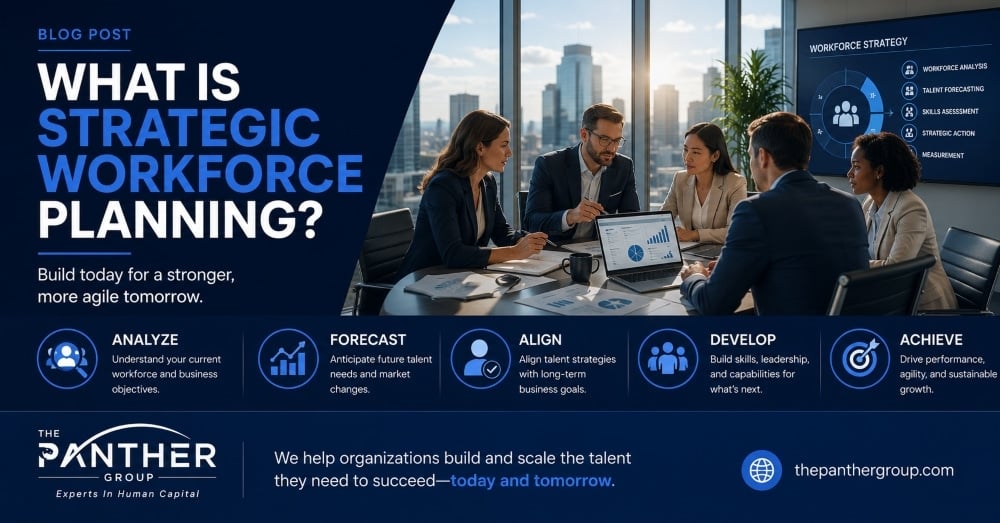
Strategic workforce planning is the continuous process of analyzing current talent, forecasting future workforce needs, and developing strategies to ensure an organization has the right people with the right skills at the right time.
Unlike traditional hiring, workforce planning considers long-term business objectives rather than immediate vacancies.
It connects:
- Business strategy
- Talent acquisition
- Employee development
- Workforce analytics
- Succession planning
- Organizational design
The result is a more agile organization capable of responding quickly to market changes.
What Are the Benefits of Strategic Workforce Planning?
Organizations that invest in workforce planning improve operational efficiency, strengthen employee engagement, reduce hiring costs, and create sustainable long-term growth.
Better Hiring Decisions
Planning ahead allows organizations to recruit proactively instead of scrambling to fill critical roles.
This leads to:
- Higher-quality hires
- Reduced time-to-fill
- Better cultural alignment
Improved Employee Retention
Workforce planning isn’t just about hiring.
It’s also about understanding employee development, career progression, and succession opportunities.
Employees who see a future with their employer are more likely to remain engaged and committed.
Greater Organizational Agility
Markets change quickly.
Organizations with workforce strategies can pivot faster because they understand where talent gaps exist before they become business problems.
Stronger Financial Performance
Strategic workforce planning reduces unnecessary hiring costs while improving productivity across teams.
Organizations avoid expensive last-minute recruiting and better allocate resources where they’re needed most.
What Should a Workforce Planning Strategy Include?
An effective workforce strategy combines business forecasting, workforce analytics, talent acquisition, leadership development, and ongoing performance measurement.
Successful workforce planning typically includes:
Workforce Analysis
Evaluate:
- Current workforce demographics
- Skills inventory
- Organizational capabilities
- Employee turnover trends
Future Workforce Forecasting
Project future staffing needs based on:
- Business growth
- Market expansion
- Technology adoption
- Customer demand
Skills Gap Assessment
Identify:
- Emerging skills
- Leadership gaps
- Critical technical capabilities
- Future workforce competencies
Talent Acquisition Strategy
Develop recruiting plans that support long-term organizational objectives rather than short-term hiring needs.
Continuous Measurement
Track key workforce metrics including:
- Time-to-fill
- Retention rates
- Internal mobility
- Employee engagement
- Hiring quality
How Can HR Consulting Improve Workforce Planning?
Experienced HR consultants provide market intelligence, workforce analytics, and strategic guidance that help organizations make better talent decisions while reducing hiring risks.
An external workforce partner offers objective insight into:
- Labor market conditions
- Compensation trends
- Competitive hiring practices
- Workforce optimization
- Organizational effectiveness
Working with an experienced consulting partner allows organizations to focus on growth while ensuring their people strategy remains aligned with business goals.
Why Partner with The Panther Group?
The Panther Group combines decades of recruiting expertise with strategic HR consulting and workforce solutions to help organizations build stronger teams and prepare for the future of work.
Our approach focuses on understanding your business—not simply filling positions.
We help organizations:
- Develop workforce strategies
- Recruit specialized talent
- Improve hiring efficiency
- Navigate organizational change
- Build resilient teams
- Support long-term growth
Whether you’re planning for expansion or addressing today’s hiring challenges, strategic workforce planning creates a stronger foundation for future success.
Key Takeaways
- Strategic workforce planning aligns talent strategy with business goals.
- Proactive planning reduces hiring costs and improves organizational agility.
- Workforce planning identifies future skills needs before shortages occur.
- HR consulting provides valuable market insights and workforce expertise.
- Organizations that invest in people strategy are better prepared for long-term success.
Frequently Asked Questions
What is strategic workforce planning?
Strategic workforce planning is the process of forecasting future talent needs and creating strategies to ensure organizations have the right people and skills to achieve business objectives.
Why is workforce planning important?
It helps businesses reduce hiring risks, improve retention, prepare for growth, and respond more effectively to changing market conditions.
How often should workforce planning be updated?
Most organizations should review workforce plans annually, with quarterly updates as business priorities or market conditions change.
What is the difference between workforce planning and recruitment?
Recruitment focuses on filling open positions, while workforce planning is a broader strategic process that aligns talent with long-term business goals.
Start The Conversation
Your workforce strategy should be as dynamic as your business.
Whether you’re preparing for growth, addressing talent shortages, or building a long-term people strategy, The Panther Group can help you create a workforce plan that supports sustainable success.